
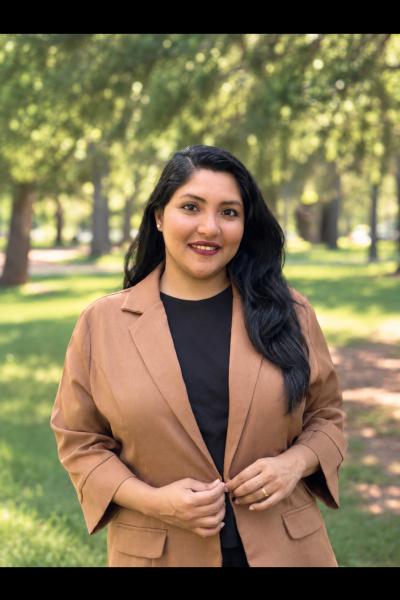
Zarin Chaity
Zarin Yesmin Chaity is a PhD candidate in the Resources, Environment and Development program at the Crawford School of Public Policy, The Australian National University (ANU). Prior to commencing her PhD at ANU, she worked as an Associate Professor in the Department of Gender and Development Studies at Begum Rokeya University, Bangladesh, and is currently on study leave. With over a decade of experience in teaching and research, her work examines the intersections of gender, climate change adaptation, and rural development, particularly in climate-vulnerable Char communities in Bangladesh.
Her doctoral research, Women in Climate-Smart Agriculture: Gendered Power Dynamics, Resource Ownership, and Intersectional Challenges in the Chars of Northern Bangladesh, investigates how gendered power relations, unequal access to resources and intersecting social identities shape women’s participation in and benefits from climate-smart agricultural initiatives. Drawing on feminist political ecology and intersectional perspectives, her research critically examines the relationships between development interventions, agricultural practices and gendered inequalities, with the aim of informing more inclusive and gender-transformative climate adaptation policies.
Zarin holds a Master of Climate Change from The Australian National University (ANU), Australia (2019–2020), supported by the Australia Awards Scholarship in 2019. Her master’s research, Seeing the River Through Women’s Eyes: A Feminist Political Ecology of the Teesta River, Bangladesh, received the 2020 ANU Gender Institute Prize for Excellence in Gender and Sexuality Research. She also holds a Master of Social Science (MSS) in Women and Gender Studies and a Bachelor of Social Science (BSS) in Women and Gender Studies from the University of Dhaka, Bangladesh.
Research Interest
Her broader research interests include feminist political ecology, gender and climate-smart agriculture, rural livelihoods, women’s empowerment, climate-induced migration, householding and transboundary water dispute.
Through her research and teaching, she seeks to contribute to gender-responsive climate adaptation and development policies that recognize women as active knowledge holders and agents of change.