The research highlights that despite limited public services, local leadership in Western Province thrives by leveraging external opportunities, with women leaders enhancing governance.
The role of the exchange rate as a shock absorber is often undermined in resource-rich developing countries when they face adverse shocks in global commodity prices.
Using nationally representative data from PNG, this seminar explains that access to improved water and sanitation plays a critical role in reducing diarrhea among young children.
The seminar will discuss feasible pathways to better governance in Papua New Guinea and stimulate discussion on potential avenues for change.
This seminar will highlight how PNG’s food VAT exemptions disproportionately benefit the wealthy due to market informality and lack of competition in rural areas.
This seminar presents findings on PNG's climate-induced displacements and resettlement efforts across five provincial case studies.
This seminar introduces a new study on payday lending in PNG, sharing preliminary insights into borrower experiences, household financial wellbeing, and evidence-based policy alternatives.
This seminar highlights how enhancing agricultural productivity can significantly contribute to job creation and poverty reduction in Papua New Guinea
This seminar analyses PNG’s income tax trends and reforms since independence, proposing a reduction in the minimum non-zero income tax rate based on historical and international analysis.
This seminar examines how institutional design can incentivise cooperation, competition, or conflict by analysing cases of civil service administration in Afghanistan and Papua New Guinea.
This seminar critiques grand institutional theories of economic growth by using a political economy model of Papua New Guinea.
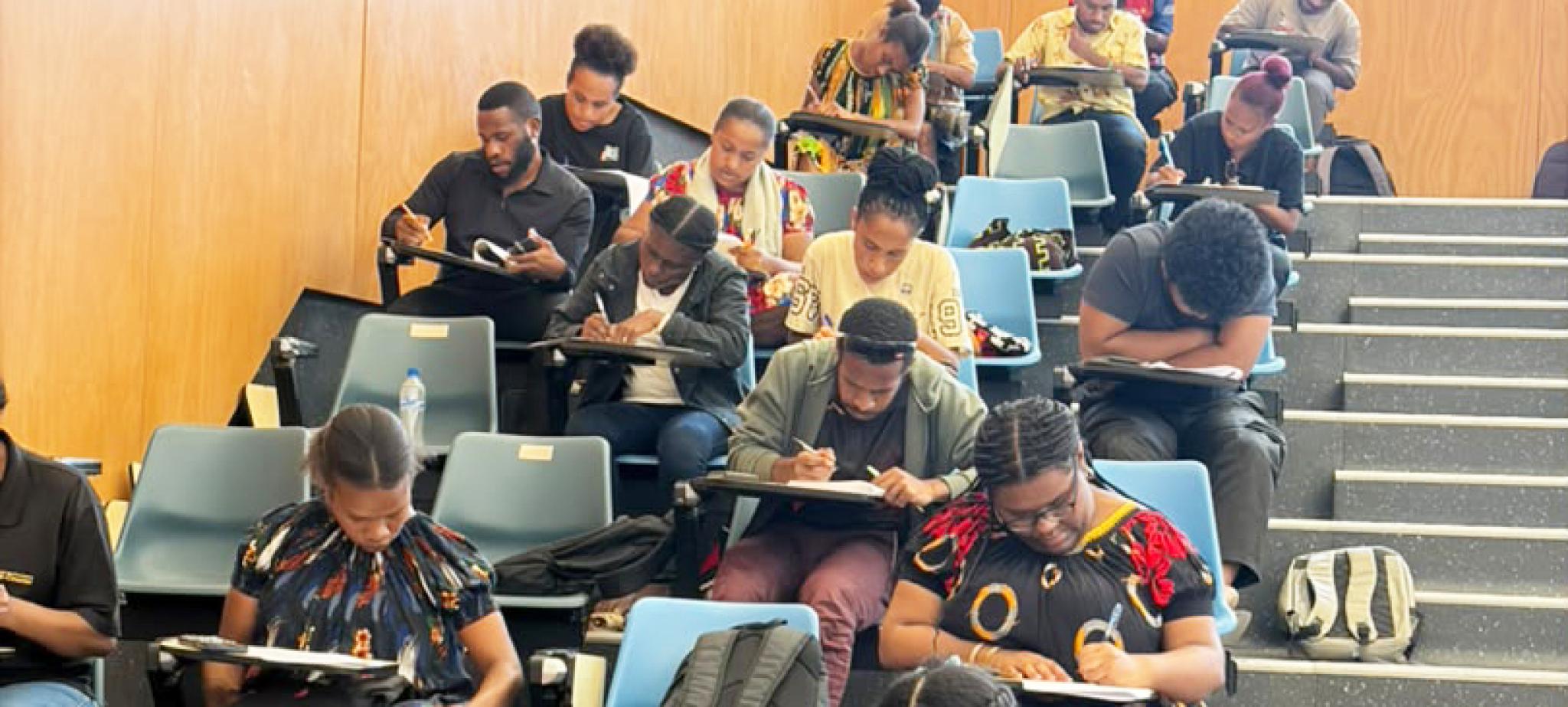
This seminar explores UPNG students’ views on key issues affecting Papua New Guinea, highlighting findings from the 2026 Annual Student Opinion Survey.